What National Night Out Gets Right About Community and First Responders
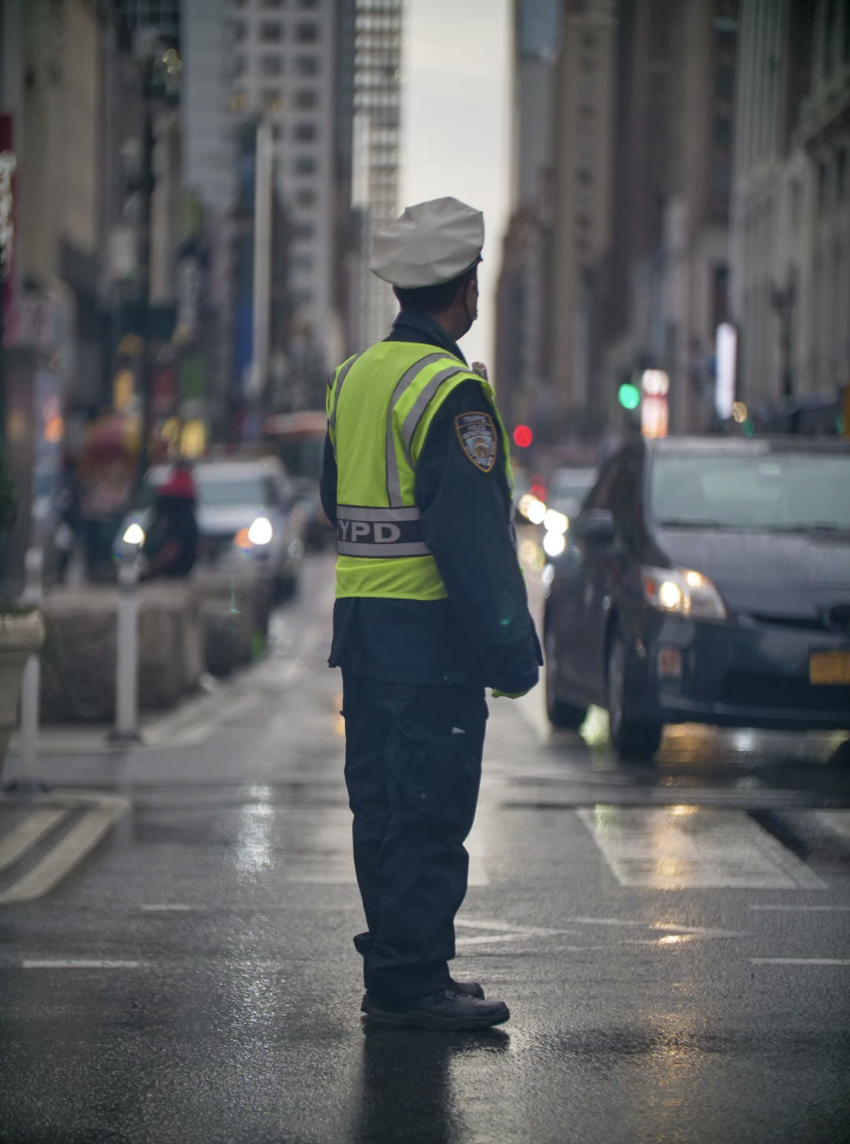
Every August, thousands of neighborhoods across the country shut down their streets for one night. Block parties. Cookouts. Kids climbing on fire trucks. Cops shaking hands instead of writing tickets.
It's called National Night Out. It started in 1984, organized by a group that's now called the National Association of Town Watch. It's not run by any single federal agency or city hall directive. It happens because thousands of individual towns and police and fire departments decide, year after year, that it's worth doing.
That's part of what makes it work. Nobody is mandating trust. Nobody is legislating a relationship between a department and the neighborhood it serves. National Night Out exists because people showed up and kept showing up, one summer at a time, until it became a fixture.
That's not a bad model for the kind of change we're trying to build at IIFR.
The Problem With Worst-Day-Only Contact
Think about how most people actually interact with a first responder. A car accident. A fire. A break-in. A medical emergency. These are, by definition, the worst moments of someone's day, sometimes the worst moments of their year or their life.
Now think about what that does to a relationship over time. If the only data points a community has about its police department or fire department are crisis moments, the relationship gets defined entirely by crisis. There's no room for anything else — no context, no familiarity, no sense of the person underneath the uniform.
National Night Out interrupts that pattern on purpose. It puts a firefighter in front of a neighborhood with nothing to put out. It puts an officer in front of a family with nothing to investigate. It's low-stakes by design, and that's exactly the point. Trust doesn't get built in high-stakes moments. It gets built in the ordinary ones, repeated often enough that they start to add up.
Trust Is an Economic Asset, Not Just a Social One
We spend a lot of time at IIFR thinking about first responders as an underused economic resource. Not because they lack the skills — quite the opposite. Because the systems that convert skill into capital, contracts, and ownership were never built with them in mind.
Here's the thing people miss: trust is one of the core assets that makes those systems work, and first responders often have more of it, earned more legitimately, than almost anyone else entering the entrepreneurial or procurement pipeline.
A firefighter who's spent twenty years running into burning buildings has more built-in credibility with a corporate risk or safety office than most first-time founders will ever have. A retired officer who's worked a beat for a decade understands operational discipline, crisis response, and community relationships in ways an MBA program can only simulate. That's not a soft skill. That's the exact profile corporate procurement teams say they want and struggle to find.
But credibility earned on the job doesn't automatically convert into capital, contracts, or a seat at the table. It has to be translated — packaged, positioned, and introduced to the rooms where those decisions get made. That translation is exactly the gap we exist to close.
Small, Visible, Repeated
What we like about National Night Out as a concept isn't the scale. It's small — a night, a block, a cookout. It's the repetition and the visibility that make it matter. Every August, it happens again. Every August, a few more relationships get reinforced, a few more kids grow up seeing a firefighter as a neighbor instead of a stranger in a truck.
That's the model. Not one big gesture. A structure that keeps showing up until showing up is the norm.
It's also why we don't think about the Frontline Founders Experience or the Ride for Resilience as one-off events. They're built the same way National Night Out is built: as a recurring structure that puts first responders in front of the people, capital, and institutions that can open doors, again and again, until the relationship is established rather than novel.
What We're Building
This is the work behind everything we do at IIFR: creating the rooms, the relationships, and the frameworks that let first responders convert decades of frontline experience into ownership, investment, and opportunity. Not as an act of charity, and not as a one-time spotlight, but as an ongoing structure — the same way a single National Night Out doesn't rebuild a community's trust in its department, but twenty years of them does.
National Night Out reminds a neighborhood that the people in uniform are their neighbors first. We're in the business of reminding the economy of the same thing — and then building the infrastructure to act on it.
Learn more about how IIFR is building pathways from service to ownership at https://www.investinfirstresponders.com