THE PROBLEM ISN'T THAT FIRST RESPONDERS WON'T ASK FOR HELP. IT'S THAT ASKING DOESN'T GUARANTEE ACCESS.
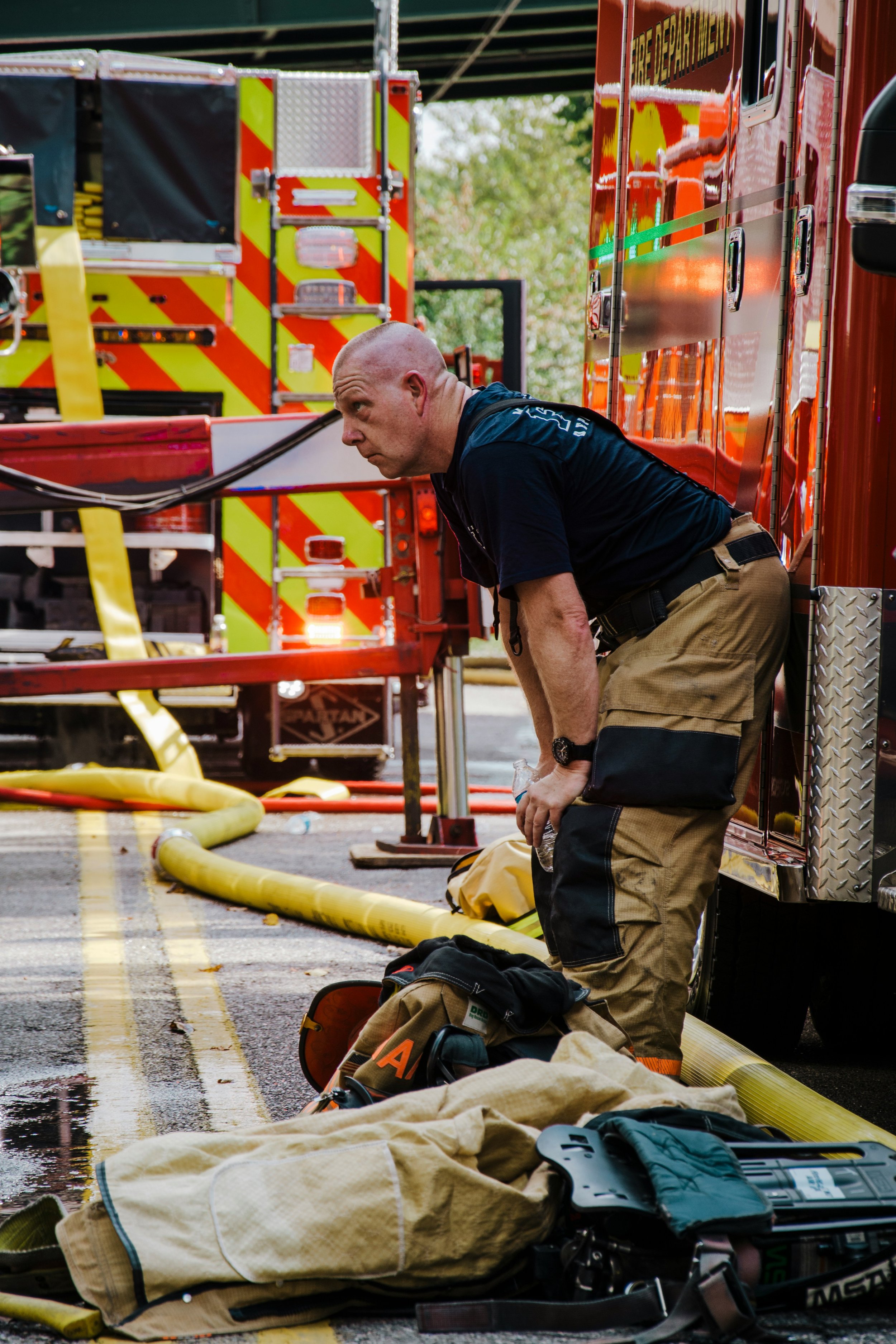
Every June, the conversation about men's mental health gets louder. PTSD Awareness Month puts first responders in the spotlight. Social media fills up with statistics. Organizations post about breaking the stigma. And the message is always some version of the same thing: if we can just get men to ask for help, we can save them.
It's a compelling narrative. It's also incomplete.
Because here's what happens when a first responder does ask for help: sometimes, there's nothing there.
No peer support program. No trauma-informed counselor who understands what it means to work a pediatric fatality or a mass casualty event. No mental health coverage in the union contract. No pathway that doesn't require disclosing to a supervisor, risking a fitness-for-duty evaluation, or sitting in a waiting room designed for a completely different kind of patient.
Stigma is real. But stigma is not the last wall standing between first responders and mental health care. The access gap is. And until we talk about that honestly, awareness months will keep cycling through without moving the needle.
What the Stigma Narrative Gets Right — and What It Misses
The stigma narrative exists for good reason. First responder culture is built on toughness, stoicism, and an identity centered on showing up for others. Admitting struggle feels, in that context, like a betrayal of the role. That conditioning runs deep, and it is a real barrier.
But focus exclusively on stigma and you create a dangerous implication: that if we change the culture, the problem solves itself. That the infrastructure will be there once the asking starts.
For a significant portion of the first responder workforce, it won't be.
Volunteer fire departments make up approximately 85% of the nation's 1.2 million firefighters. Most operate without dedicated peer support, without mental health provisions in their contracts, and without access to counselors who understand occupational trauma. Rural law enforcement agencies and small EMS services are in the same position. The gap between the departments with robust mental health infrastructure and the departments with none is not a stigma gap. It is a funding gap.
Telling someone to ask for help when there is nothing on the other end of the ask isn't encouragement. It's a setup for a different kind of failure.
The Specific Barriers That Awareness Months Don't Fix
For a first responder who decides to seek help, the path is rarely straightforward. The barriers that remain after stigma is addressed are structural, specific, and stubborn.
Career risk is real. The fear that seeking mental health support could result in removal from duty, a fitness-for-duty evaluation, or a permanent mark on a personnel file isn't irrational — it reflects the actual policies of many departments. Until those policies change, asking for help carries professional consequences that no awareness campaign can eliminate.
Cultural competence is rare. Finding a mental health professional who genuinely understands first responder culture — the dark humor, the occupational identity, the particular weight of cumulative trauma exposure — is harder than it sounds. A firefighter who spends one session explaining what the job actually is to a therapist who has never heard of a LODD is unlikely to come back for a second.
Schedules don't accommodate standard care. Twenty-four hour shifts, rotating schedules, and mandatory overtime make consistent weekly therapy nearly impossible. Mental health infrastructure that doesn't account for how first responders actually work isn't accessible — it just exists.
Confidentiality isn't guaranteed. In departments where peer support programs haven't been formalized with clear confidentiality protections, the concern that a conversation could reach a supervisor isn't paranoia. It's a reasonable read of the situation.
These are not stigma problems. They are system problems. And they require system solutions.
What Men's Mental Health Month Owes First Responders
June is valuable. Awareness creates entry points. When a first responder sees a statistic about suicide rates in their profession and recognizes themselves in it, that moment of recognition can matter. We are not arguing against awareness.
We are arguing that awareness without infrastructure is a promise that can't be kept.
Nearly 47% of firefighters report experiencing suicidal ideation at some point in their career. Law enforcement officers face a suicide risk approximately 54% higher than the general population. These numbers don't move because of a month. They move because of peer support programs with protected funding and trained personnel. Because of trauma-informed counselors available at non-traditional hours. Because of union contracts that include mental health provisions. Because of departments that treat wellness as operational readiness rather than personal weakness.
That's what this month should be building toward. Not just a louder conversation — a better-resourced one.
What It Actually Takes
The first responders most likely to access mental health support are the ones whose departments have built the infrastructure to deliver it. That means:
Peer support programs staffed by trained first responders who have been through it — people whose credibility comes from shared experience, not a credential on a wall.
Confidentiality protections that are explicit, formalized, and enforced — so that asking for help doesn't require trusting that the system will protect you.
Clinical resources that are culturally competent and schedule-accessible — available outside business hours, familiar with occupational trauma, and connected to peer programs rather than operating in parallel.
Sustained funding that allows organizations to plan, to hire, and to maintain continuity of care over time — not reactive capital that arrives after a crisis and disappears before the next one.
None of this happens because a month raised awareness. It happens because someone decided to build it — and someone else decided to fund it.
If You Want to Do More Than Observe
PTSD Awareness Month and Men's Mental Health Month are the beginning of a conversation, not the end of one. The question they should leave every organization, every corporation, and every community member with is simple:
What are we actually building?
Because the first responders in your community — the ones running into the situations everyone else runs away from — don't need another month. They need programs that are there when they're ready to ask.
Build what's there when it matters at investinfirstresponders.com
Invest in First Responders (IIFR) connects corporate capital and foundation funding with trusted, peer-led organizations on the frontlines. We build the infrastructure that makes asking for help worth doing.